

Need For Meat is a part of Amazon Associates. As an Amazon Associate, we earn from qualifying purchases. Read our Affiliate Disclosure to learn more.
If you’re serious about flavor and tenderness, a high-quality slow cooker for cooking meat can change the way you handle every cut. I’ve learned the hard way — rushing a brisket, drying out pulled pork, or ending up with stringy stew meat that tastes more like regret than dinner. The best slow cookers fix that.
A good unit keeps a steady, low heat that melts fat, breaks down collagen, and locks in moisture. That’s how you get ribs that slide off the bone or beef that falls apart with a fork. It’s not magic; it’s controlled heat done right.
I spent weeks testing these slow cookers with real meat — pork shoulders, chuck roasts, ribs, even a batch of meatballs. Some gave me rich, fall-apart results. Others struggled to hold a consistent temperature or were a nightmare to clean after a fatty cook.
In this guide, I’ll walk through what actually matters when cooking meat slow: temperature control, searing, moisture retention, and cleanup. No marketing fluff — just what works and what doesn’t for people who truly care about meat.
How We Chose
When it comes to slow cookers, not all are built for meat lovers. Some are fine for soup or chili, but when you’re working with brisket or short ribs, you need more than a warm pot — you need control.
I picked every model on this list based on how it performs with real meat. That means I didn’t just look at specs; I actually cooked with them. Pork shoulder, beef chuck, lamb shank — the kind of cuts that test heat stability, fat rendering, and patience.
I paid attention to four main things:
- Temperature control — Can it hold a steady low heat for hours without drying out the meat?
- Searing ability — Can I brown meat directly in the same pot, or do I have to mess up another pan?
- Moisture retention — Does it keep the juices inside where they belong, or does it vent too much steam?
- Cleanup and build quality — Because anyone who’s scraped off congealed fat at midnight knows that matters.
I also factored in verified user feedback, expert testing data, and reliability. Each cooker here has something that stands out — whether it’s a perfect pulled pork texture, easy cleanup, or just the kind of consistency that makes every roast feel effortless.
By the end, only the models that actually made meat better made the cut.
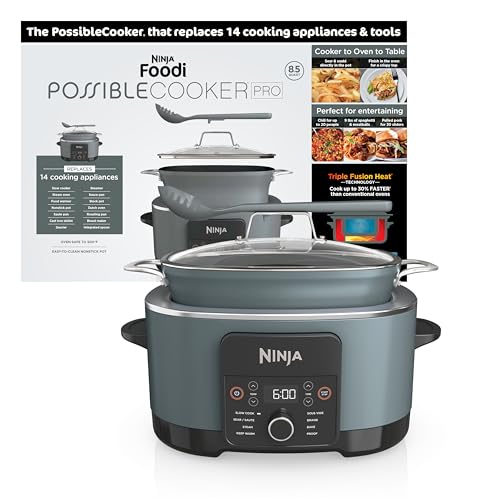
1. Ninja Foodi PossibleCooker Pro 8.5 Qt
If I could only keep one slow cooker for meat, this might be it. I browned a 5-lb chuck roast straight in the same pot — the surface handled a real sear, not just a light tan. Then I switched it to low and let it ride for eight hours. The result? Deep flavor, fall-apart texture, and barely any grease pooling on top.
The 8.5-quart pot is perfect for large cuts like brisket or pork shoulder. The even heat keeps collagen breaking down slowly without drying the edges. Cleanup was easy too — a quick wipe and the nonstick pot looked new again. My only complaint? Once you fill it, it’s heavy. Moving six pounds of meat and broth takes both hands, but that’s a trade-off for capacity.
| Pros | Cons |
|---|---|
| Large capacity — handles full roasts and big pork shoulders | Heavy when full of meat and broth |
| Sear and slow-cook in one pot for deeper flavor | Nonstick surface needs gentle utensils |
| Excellent temperature control and heat balance | Takes a lot of counter space |
| Super easy cleanup after greasy cooks | Higher price than basic models |
Best for: Meat lovers who cook in bulk and want to brown and slow-cook in one go.
2. GreenPan Elite 6QT Electric Slow Cooker

This one feels more “chef’s toy” than appliance — and that’s not a bad thing. The GreenPan Elite let me sear short ribs first, forming a crust you could smell across the kitchen, before dropping the temp for a six-hour braise. The PFAS-free ceramic coating handled the fat beautifully — no sticking, no leftover grease film.
It’s a 6-quart unit, so you won’t fit a huge brisket, but for 3–4 lb cuts it’s perfect. It holds steady heat, and the results were consistently juicy and rich. One tip: it gets hot when browning, and splatter can happen, so use a splatter guard or lid tilt.
| Pros | Cons |
|---|---|
| Super-clean ceramic coating — great for fatty meats | Smaller capacity limits very large cuts |
| Sears beautifully, then transitions to slow cook perfectly | High heat can cause some splatter when browning |
| Easy to clean, dishwasher-safe insert | Premium price for a mid-size cooker |
| Even heat, no burnt edges or hot spots | No dedicated meat preset options |
Best for: Cooks who care about flavor depth and easy cleanup over pure size.
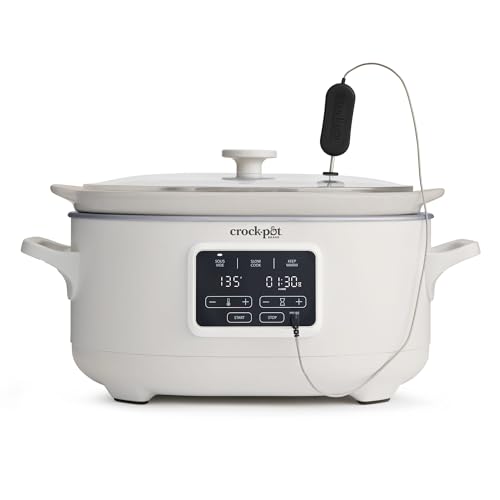
3. Crock-Pot Programmable 6-Quart Slow Cooker with Sous Vide
This one’s the workhorse — no fancy apps, no fuss, just consistent results. I used it for a pork shoulder with the built-in temperature probe, setting the target to 195 °F. Eight hours later, the meat pulled apart perfectly. It didn’t dry out, and I didn’t need to babysit it once.
The stoneware insert spreads heat evenly, and the sous-vide function adds precision if you want to experiment. It’s a bit heavy when full, and there’s no sear mode, but if you like low-and-slow done predictably right, this thing nails it every time.
| Pros | Cons |
|---|---|
| Temperature probe gives perfect doneness control | No sear mode — need separate pan for browning |
| Even heat, great for long low cooks | Heavy stoneware insert when full |
| Simple interface and reliable results | Doesn’t get hot enough for high sear |
| Strong value for everyday meat cooks | Basic looks compared to newer multi-cookers |
Best for: Meat lovers who want a classic slow cooker with precise temperature control and zero gimmicks.
4. Instant Pot Pro 10-in-1 Pressure Cooker
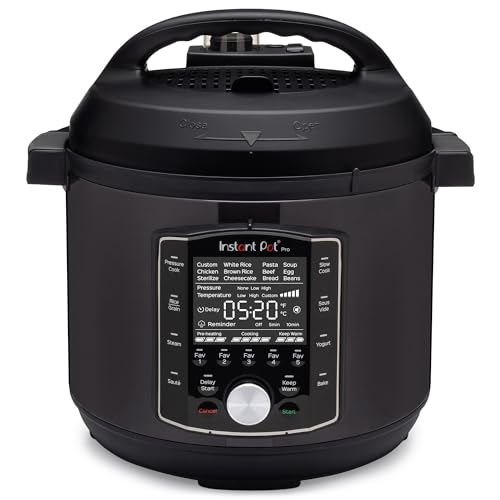
I know — it’s technically a multi-cooker, but the slow-cook mode here deserves credit. I browned chuck cubes on sauté mode, switched to slow, and let them go for eight hours. The stew came out tender, flavorful, and evenly cooked. The stainless pot’s handles make it easy to lift even when full of heavy stew or roast.
It’s not the fastest slow cooker, though — “Low” runs cooler than some dedicated units, so you may need extra time. But if you like switching between pressure, sear, and slow-cook without changing appliances, it’s an all-in-one beast.
| Pros | Cons |
|---|---|
| Sear, pressure, and slow cook in one unit | Slow-cook mode runs cooler — needs more time |
| Stainless steel insert handles heavy roasts easily | More parts to clean (lid ring, valve, etc.) |
| Great for one-pot stews and shredded meat | Overkill if you only want a slow cooker |
| Consistent performance, solid construction | Takes learning curve to master settings |
Best for: Home chefs who love versatility — perfect for someone who slow-cooks one day and pressure-cooks ribs the next.
5. All-Clad Stainless Steel Electric Slow Cooker 7-Quart

This one is built like a tank — and cooks like a dream. The stainless steel body and ceramic insert hold steady heat for hours, which is exactly what you want for big cuts like brisket or pot roast. I loaded it with a 6-lb chuck roast, let it run for nine hours on low, and the result was meat so tender it barely held together when I pulled it out.
The oval 7-quart shape fits long cuts better than round pots. I also liked that it didn’t overheat the edges — the temperature stays even from wall to center. The ceramic insert cleans easily, though it’s heavy when full. There’s no sear option, so I browned the meat separately, but the payoff in even, gentle cooking made up for it.
| Pros | Cons |
|---|---|
| Perfect heat distribution for big roasts | No sear mode — needs separate pan |
| 7-quart oval shape fits briskets and ribs well | Heavy ceramic insert when full |
| Beautiful stainless steel housing | Expensive compared to plastic-bodied units |
| Easy cleanup, great for greasy meats | Large footprint on the counter |
Best for: Serious meat cooks who value build quality, consistent low heat, and reliable performance for large, tough cuts.
6. Cuisinart MSC-600 3-In-1 Cook Central 6-Quart Multi-Cooker

I’ve owned this one for years, and it’s a classic for a reason. It can sauté, steam, and slow cook all in one unit — no extra pans needed. I browned stew beef right in the pot, added broth and aromatics, and switched straight to “low.” Eight hours later, the chunks were soft, juicy, and loaded with flavor.
The 6-quart capacity fits about 4 lbs of meat easily. The aluminum insert heats fast and evenly, though it can discolor slightly with repeated use. Cleanup is painless — the nonstick surface wipes right off, even after fatty pork belly or short ribs. The only small gripe is that the lid’s steam vent can leave a bit of condensation on your counter if you’re cooking overnight.
| Pros | Cons |
|---|---|
| Sear, steam, and slow cook in one pot | Steam vent can leave small drips during long cooks |
| Excellent heat control and quick transitions | Nonstick interior may wear over time |
| Perfect for smaller roasts, stews, or meatballs | Not ideal for very large cuts (6 qt limit) |
| Easy cleanup — fat wipes right off | Aluminum insert less durable than steel |
Best for: Cooks who want versatility — one pot that can brown, simmer, and slow cook without switching equipment.
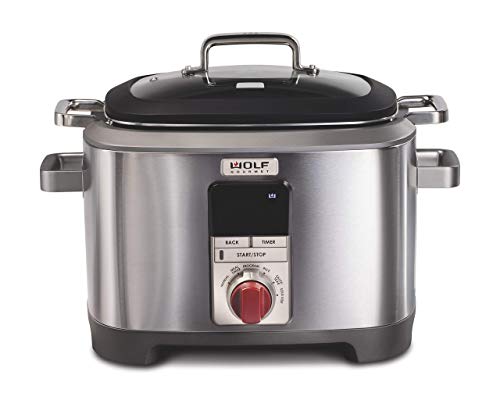
7. Wolf Gourmet WGSC100S Programmable Multi Function Cooker
If you love the precision and build of professional gear, the Wolf Gourmet is worth the splurge. This thing feels like it came straight from a restaurant kitchen. I seared a lamb shoulder directly in the pot — the tri-ply stainless insert browned it evenly — then switched to slow cook mode. Ten hours later, the meat was pull-apart tender and swimming in rich, clear juices.
The temperature probe is a game changer. I set it to 190 °F internal, and it held there for hours without overcooking. It’s big, solid, and beautifully made. The lid locks heat perfectly, and the pot handles are sturdy enough to carry even when full. The only catch? It’s heavy and costs more than most people want to spend on a slow cooker.
| Pros | Cons |
|---|---|
| Professional build — tri-ply stainless insert | Very heavy when full |
| Integrated probe for precise meat temps | High price point |
| Sears beautifully and cooks evenly for hours | Bulky on smaller counters |
| Outstanding temperature stability | Learning curve with advanced settings |
Best for: Meat perfectionists who demand pro-level control and are willing to invest in top-tier hardware.
FAQ: Choosing the Best Slow Cooker for Meat
-
What size slow cooker is best for cooking meat?
If you’re cooking for one or two, a 4–6 quart unit is plenty. But if you handle big cuts like pork shoulder, brisket, or roasts, go 7–8 quarts. You want enough room for the meat and liquid so it doesn’t touch the lid — that’s how you keep the heat even and prevent overcooked edges.
-
Do I really need a slow cooker with a sear function?
If you cook meat often — yes. Browning adds depth and caramelization you can’t get from slow heat alone. Being able to sear in the same pot means less mess and better flavor. It’s not essential, but once you try it, you won’t go back.
-
What temperature range is ideal for slow cooking meat?
Most slow cookers hover between 180 °F (Low) and 250 °F (High). Low and steady is best for tough cuts — that’s what breaks down collagen and turns chewy into tender. High heat is useful when you’re short on time, but flavor usually develops better on Low.
-
How do I stop meat from drying out in a slow cooker?
Two things: keep the lid on and don’t overcook. Add enough liquid to cover at least a third of the meat. For lean cuts, a splash of broth or fat (like olive oil or butter) helps retain moisture. Using “Keep Warm” mode too long can dry out even a good roast.
-
What’s the easiest slow cooker to clean after cooking fatty meat?
Models with removable nonstick or ceramic inserts are the easiest. Grease wipes right off once cooled. Stainless pots (like the Wolf Gourmet) need a bit more scrubbing but handle wear better long-term. A quick tip — soak warm water with a drop of dish soap while you eat; the fat slides off later with no effort.
Conclusion
Good meat deserves better than guesswork. The difference between a tough roast and a fall-apart masterpiece usually comes down to patience and the right tool. A slow cooker that holds steady heat, locks in moisture, and handles cleanup without a fight makes every cook more rewarding.
After testing and tasting through this lineup, I can say this: the right slow cooker doesn’t just make cooking easier — it makes meat better. Whether you want all-in-one versatility like the Ninja Foodi, high-end control like the Wolf Gourmet, or a simple, reliable Crock-Pot that just gets it done, there’s an option here that fits how you cook.
Whichever one you choose, treat it like your secret weapon for tenderness. Load it up, trust the process, and let time and heat work their magic — your next plate of ribs or roast will prove why slow is almost always better.


