

Need For Meat is a part of Amazon Associates. As an Amazon Associate, we earn from qualifying purchases. Read our Affiliate Disclosure to learn more.
There is a popular saying in Croatia: “A sharp knife is not dangerous, a dull one is.” I have found that to be true every time I carve meat. A dull blade will tear brisket, waste juices, and leave you frustrated at the table. That is why having the best meat cutting knives is not just nice to have, it is essential.
The tricky part is that not every knife does the same job well. The slicer that glides through brisket will not trim ribs the way a boning knife can, and a heavy cleaver meant for bones will never give you neat, even slices. If you have been relying on a basic chef’s knife, you are probably working harder than you need to and not getting the results you deserve.
After testing knives in my own kitchen and at the smoker, I have narrowed it down to the 10 best meat cutting knives that actually deliver. These are the ones that make slicing, trimming, and breaking down big cuts easier, cleaner, and more satisfying.
1. Shun Classic 12″ Hollow Ground Brisket Knife (DM0778)
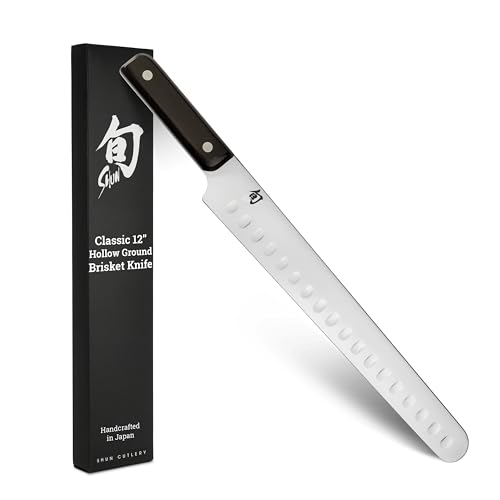
When I first picked up the Shun Classic brisket knife, it felt like a statement piece. The 12-inch Damascus blade is stunning, but more importantly, it is built for performance. I used it to slice through a smoked brisket, and the blade just glided—no tearing, no sawing, just smooth, clean slices that made the meat look as good as it tasted.
The core is Shun’s VG-MAX steel, which is hardened enough to hold a razor edge for a long time. I noticed right away that the edge retention is better than most of my German knives. The scallops (those hollow grind marks) on the blade make a real difference too—they let the meat fall away instead of sticking, which is a big deal when you are slicing something juicy like prime rib.
The handle is a D-shaped pakkawood, and while it feels solid and locks into my palm nicely, it is clearly designed with right-handed users in mind. I had a left-handed friend try it, and it felt awkward for him. Another small note: this knife is very specialized. It is not the blade you grab for chopping or trimming fat; it is for slicing large roasts, briskets, and hams with precision.
Price-wise, it sits at around $240, which is steep. But when you think about the cost of the meat you are slicing—sometimes $100+ for a single brisket—the investment makes sense if you want presentation-worthy results every time. For me, it is the knife I bring out when I want my slices to impress.
| Pros | Cons |
|---|---|
| Exceptional slicing performance with long, clean cuts | Expensive compared to other slicers |
| VG-MAX steel holds a razor edge | Right-handed handle not ideal for lefties |
| Hollow ground blade reduces sticking | Specialized knife, not versatile for other tasks |
| Beautiful fit, finish, and included wooden sheath | Requires regular honing and careful maintenance |
2. Wüsthof Gourmet 14″ Hollow Edge Brisket Slicer
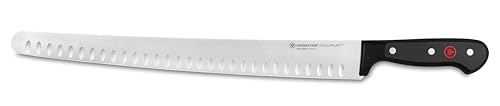
The first time I used the Wüsthof Gourmet 14-inch slicer, the length of the blade really stood out. It is one of the longest consumer brisket knives you can buy, and that extra reach makes a difference. I was able to slice across a full packer brisket in a single stroke, which kept the slices neat and uniform without the sawing motion shorter knives force you into.
The blade is stamped from Wüsthof’s X50CrMoV15 stainless steel. It is not as hard as the Shun, so it does not hold an edge quite as long, but it strikes a good balance between sharpness and durability. Out of the box, it was razor sharp thanks to Wüsthof’s PEtec sharpening. I also noticed the granton edge (the little scallops) really helps with sticky bark from smoked brisket, letting the slices fall cleanly away.
The handle is made from durable synthetic POM, triple-riveted to the tang. Unlike Shun’s right-handed D-shape, this one is symmetrical, so both right- and left-handed users will be comfortable. The only issue I ran into was when my hands got greasy—this handle can get slippery, especially if you are not wearing gloves. At around ten ounces, the knife has enough heft to feel solid but not tiring to use.
The biggest challenge with this slicer is storage. Fourteen inches of blade will not fit in most blocks, so you will probably need a wall magnet or a sheath. That said, for around $100, it delivers impressive slicing performance without the premium price tag of forged models. If you want extra length for briskets and roasts, this knife gets the job done beautifully.
| Pros | Cons |
|---|---|
| Extra-long 14″ blade slices whole briskets in one stroke | Handle can get slippery with grease |
| Granton edge prevents sticking, even with bark | Stamped blade is less durable than forged |
| Lightweight yet balanced, comfortable for long use | Storage is tricky due to blade length |
| Affordable price compared to premium slicers | Edge retention is shorter than Japanese steel |
3. Mercer Culinary Millennia 14″ Granton Edge Slicer (M13914)
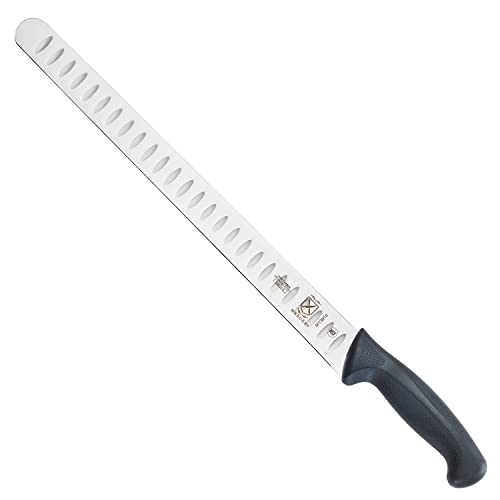
If you are looking for serious slicing power without spending big money, the Mercer Millennia is the one I recommend first. At just over $40, it costs a fraction of premium slicers, yet it still handles a brisket or prime rib beautifully. I used it to portion smoked turkey and a whole brisket flat, and the 14-inch blade cut through in one smooth pull, leaving clean slices that did not shred the meat.
The steel is softer (around 53–54 HRC), so it does not keep an edge as long as high-end Japanese knives. But that is actually a plus in busy kitchens because it sharpens quickly and forgives mistakes. The scalloped granton edge works well to keep meat from sticking, and the blade itself has just the right mix of stiffness and flex.
The standout feature for me is the handle. Mercer uses a mix of Santoprene for grip and polypropylene for durability. Even when my hands were greasy from trimming pork shoulders, this handle stayed locked in my grip. The finger guard adds extra security, and the whole handle is sealed, which keeps it sanitary and NSF-approved for food service.
Of course, it does feel like a budget knife. The plastic handle is purely functional, not pretty, and the edge will need regular honing. It also lacks the heft of forged knives, which some cooks actually prefer when slicing large cuts. But at this price, it is hard to complain. For BBQ teams, caterers, or home cooks who want a dependable slicer on a budget, the Millennia punches way above its weight.
| Pros | Cons |
|---|---|
| Affordable price (~$40) with professional performance | Edge dulls faster than premium steels |
| 14″ blade slices brisket and roasts in one pass | Plastic handle feels utilitarian, not refined |
| Grippy dual-material handle stays secure when greasy | Lacks the heft of forged slicers |
| NSF certified and easy to clean for food service | Needs frequent honing and sharpening |
4. Victorinox Fibrox Pro 12″ Granton-Edge Slicer (5.4723.30)

This Victorinox slicer is one of those knives that every BBQ forum seems to recommend, and after using it myself I get why. At just under 12 inches, it is not quite as long as the Shun or Mercer slicers, but it is extremely light and nimble. Weighing only 6.2 ounces, it feels like an extension of your hand, which makes long slicing sessions surprisingly easy.
The blade is made from X50CrMoV15 stainless steel, the same steel used in many German knives, hardened to about 55–56 HRC. It is tough enough to resist chipping, sharpens easily, and with the granton edge, slices of brisket and ham just fall away cleanly. I also found it versatile enough for slicing large roasts, smoked turkey, or even big fish.
What really makes this knife shine is the Fibrox handle. It is textured, NSF-certified, and grippy even when wet or greasy. That makes it a favorite for pitmasters working over a hot smoker where gloves and sweaty hands are the norm. The handle is sealed too, so there are no gaps for bacteria—something commercial kitchens love.
The trade-off is that it feels utilitarian. The handle is not pretty, and the stamped blade is very light, which means you do not get the weight advantage you get from knives like the Wüsthof. It also flexes more than a forged blade, which can be a plus when following contours but not ideal if you want perfectly uniform slices. At around $40, though, it is an incredible value and a knife I do not mind beating up in the smoker pit.
| Pros | Cons |
|---|---|
| Lightweight and easy to handle for long slicing | Stamped blade lacks the heft of forged knives |
| Granton edge prevents sticking and keeps slices clean | Blade flexes more than premium slicers |
| NSF-certified Fibrox handle is grippy even when wet | Handle looks utilitarian, not refined |
| Affordable price (~$40) with lifetime warranty | Edge is ground at a wider angle, may need reprofiling |
5. Wüsthof Classic 6″ Flexible Boning Knife

When I need to get precise around bones or trim a brisket flat, the Wüsthof Classic boning knife is one of my go-to tools. Unlike stamped blades, this one is fully forged, which gives it more rigidity and a balanced feel in hand. The six-inch blade is narrow with just the right amount of flex—enough to hug bones and work around cartilage, but stiff enough that you still feel in control.
Made from Wüsthof’s X50CrMoV15 stainless steel, it is hardened to about 58 HRC and sharpened to a fine 14 degrees per side. That gives it a sharp edge that lasts longer than cheaper boning knives I have used. I put it through trimming pork shoulders and frenching lamb racks, and the edge held up impressively well, even when pressing against bone.
The handle is Wüsthof’s classic triple-riveted POM, which is durable and comfortable, though I did notice it gets a little slippery when greasy. The balance point sits near the bolster, which makes it easy to maneuver for detailed cuts. At about five ounces, it is light enough not to fatigue my hand but solid enough to feel trustworthy.
The main downside here is the price. At around $120, it costs several times more than the Victorinox or Mercer boning knives, and for casual cooks that difference may not be worth it. Also, some pitmasters prefer a more flexible blade for trimming fat, and this one leans stiffer. But if you want a precise, durable, forged boning knife that will last for years, the Wüsthof Classic is a strong choice.
| Pros | Cons |
|---|---|
| Fully forged blade with excellent balance and durability | Expensive compared to other boning knives |
| Sharp edge that holds up well against bone and cartilage | Handle can get slippery when greasy |
| Controlled flex makes it ideal for precise trimming | Not flexible enough for pitmasters who prefer very bendy blades |
| Comfortable triple-riveted handle with good weight | Slight right-handed bias due to bolster design |
6. Victorinox Fibrox Pro 6″ Curved Boning Knife (5.6603.15)
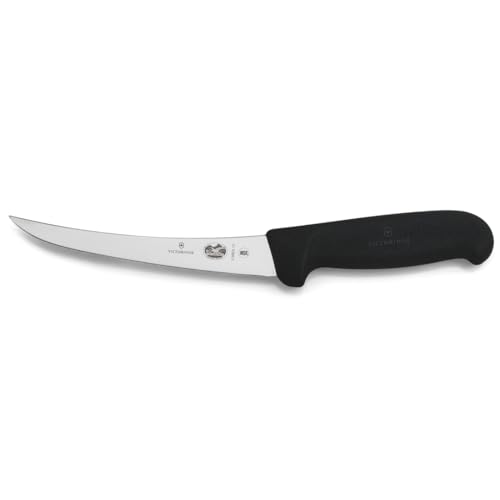
If I could recommend just one budget-friendly boning knife to a new pitmaster, this would be it. The Victorinox Fibrox Pro 6-inch curved boning knife is a workhorse that butchers and BBQ pros swear by. I have trimmed briskets, pork shoulders, and chicken with it, and it handles all of those tasks without fuss.
The semi-flexible blade curves just enough to follow the natural contours of ribs and joints, while the fine tip makes it easy to pierce silverskin or tendon. At only 3.4 ounces, it is extremely light, which makes it comfortable to use for long trimming sessions. The stainless X50CrMoV15 steel sharpens quickly, so even if the edge wears faster than premium knives, it only takes a few passes on a honing steel or whetstone to bring it back.
The Fibrox handle is what sets this knife apart. It is textured, grippy, and NSF-certified, which means it stays secure even when wet or greasy. I have used it with brisket fat all over my hands, and it still felt stable. The sealed handle also keeps food particles from getting trapped, making it more hygienic than riveted handles.
Of course, at this price point, you sacrifice some refinement. The factory edge can be coarse and usually benefits from a touch-up. Being semi-flexible, it lacks the stiffness needed for heavy-duty work like breaking joints. The handle looks plain and can stain over time. But for around $20, this knife is unbeatable in terms of value and practicality.
| Pros | Cons |
|---|---|
| Extremely affordable (~$20) and widely available | Factory edge can be coarse, needs touch-up |
| Semi-flexible blade follows bones and contours easily | Not stiff enough for heavy-duty joint work |
| Lightweight and easy to maneuver for trimming | Handle looks plain and may stain over time |
| Textured Fibrox handle stays grippy when greasy | Edge requires regular honing due to softer steel |
7. Mercer Culinary BPX 5.9″ Stiff Curved Boning/Trimming Knife (M13703)
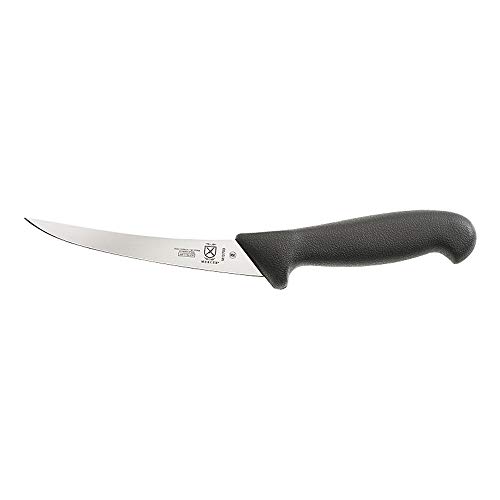
When I need a boning knife with some backbone, the Mercer BPX is the one I reach for. Unlike flexible knives that bend around bones, this one stays firm, which makes it perfect for trimming brisket fat or cutting through tough silverskin without fighting the blade. I used it on a pork shoulder and was impressed by how cleanly it cut connective tissue without flexing out of line.
The blade is made from German X50CrMoV15 stainless steel, hardened to about 57–58 HRC. That gives it better edge retention than Mercer’s cheaper Millennia series, and the mirror-polished finish reduces drag while making cleanup easier. The curved edge helps sweep along bones, while the pointed tip is sharp enough to pierce membranes or small tendons.
The handle is big and rugged, made from glass-reinforced nylon with deep finger grooves and a strong guard. It feels locked into my hand, even during heavy trimming sessions. The downside is that it is bulky, so cooks with smaller hands may find it less comfortable than slimmer handles like the Victorinox Fibrox.
At around $25, the BPX is a great middle ground between ultra-budget knives and pricey forged options. It will not flex like the Victorinox, so it is not ideal for fish or delicate boning, but if you want a stiff knife that can muscle through trimming tasks with control, this one is hard to beat.
| Pros | Cons |
|---|---|
| Stiff blade cuts fat, silverskin, and tendons cleanly | Too stiff for delicate work or fish boning |
| German steel with solid edge retention | Handle feels bulky for smaller hands |
| Mirror polish reduces drag and makes cleaning easier | Factory grind angle is wider, not razor sharp |
| Affordable price (~$25) with professional feel | Stamped blade lacks prestige of forged knives |
8. F. Dick ErgoGrip 10″ Breaking Knife
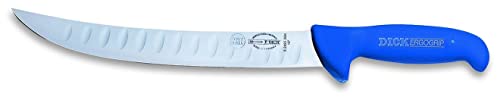
The F. Dick ErgoGrip is one of those knives you see in professional butcher shops for a reason. I tried it on pork shoulders and beef chuck, and the wide, curved 10-inch blade made breaking down those big cuts a lot easier than with a standard slicer. The curve lets you pull long, smooth cuts that follow the natural shape of the meat, and the pointed tip is great for getting between joints.
The steel is X55CrMo14, a tough German stainless alloy hardened to about 56 HRC. It holds a good edge, sharpens easily, and the polished finish noticeably reduces drag when cutting through fat and cartilage. It is not razor-thin like a brisket slicer, but that extra thickness makes it stronger when handling tougher tasks.
The ErgoGrip handle lives up to its name. It is a big, textured polypropylene grip with a wide thumb rest and a pronounced finger guard. Even when my hands were slick from trimming ribs, it stayed steady and comfortable. The handle is sealed with no rivets, which keeps it hygienic and easy to sanitize. This is why the knife is NSF-approved and popular in meat processing.
The only real downsides are size and looks. It is a big knife that feels clunky if you are not used to handling butcher blades, and the chunky handle is not for small hands. The design is purely utilitarian too—it is not a knife you pull out to impress at the dinner table. But for around $30, this is a serious breaking knife that works hard and holds up well.
| Pros | Cons |
|---|---|
| Curved 10″ blade ideal for breaking down large cuts | Large size can feel unwieldy for small kitchens or hands |
| Durable German steel with polished finish to reduce drag | Looks purely utilitarian, not refined |
| Ergonomic, non-slip handle with thumb rest and guard | Too thick for fine, delicate slicing tasks |
| Affordable price (~$30) for pro-level breaking knife | Not as widely available in the US as Mercer or Dexter |
9. Dexter-Russell Sani-Safe 12″ Cimeter Steak Knife (05543)
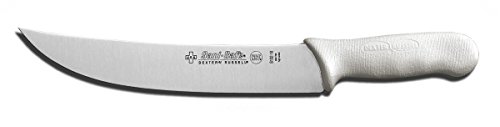
The Dexter-Russell cimeter is a classic American butcher’s knife, and after using it I understand why it has been a staple in meat shops for decades. With its wide, curved 12-inch blade, it makes portioning steaks and trimming large cuts feel effortless. I used it to break down a whole ribeye roast, and the curve of the blade helped me keep consistent slices while the pointed tip pierced through thick fat caps cleanly.
The blade is made from DexSteel, Dexter’s proprietary high-alloy stainless steel, hardened to around 54–56 HRC. It is not the hardest steel, but it sharpens easily and has enough toughness to handle daily butchery work. The edge came sharp and held up through multiple sessions of trimming beef loins without needing more than a quick honing.
The handle is what sets the Sani-Safe line apart. Made from textured polypropylene, it is slip-resistant, heat-resistant up to 250°F, and completely sealed for hygiene. Even when my hands were greasy, it stayed locked in, which is critical when working with a blade this size. The knife is NSF-certified, making it suitable for commercial use.
On the downside, this knife is all about utility. It is long, so storage requires either a sheath or a magnet bar. The handle, while grippy, is harsh on the hands after long use compared to softer materials like Santoprene. And while it does its job well, it does not have the refined fit and finish of pricier imports. But for about $45, it is a dependable workhorse for butchers and pitmasters who want power and control in a big slicer.
| Pros | Cons |
|---|---|
| Curved 12″ blade excels at portioning and trimming | Handle texture can feel rough during long sessions |
| DexSteel is tough, easy to sharpen, and holds a good edge | Utilitarian finish with visible grind marks |
| Slip-resistant, sealed handle is safe and hygienic | Large 12″ blade requires special storage |
| Affordable (~$45) and widely used in butcher shops | Edge retention is shorter than premium knives |
10. Dexter-Russell S5288 8″ Heavy-Duty Cleaver

This cleaver is pure brute force. At 2.7 pounds, the Dexter-Russell S5288 feels like a hammer in knife form, and it is exactly what I reach for when I need to chop through bones or thick joints. I used it to split pork ribs and break down chicken leg quarters, and the sheer weight of the blade did most of the work for me. With this cleaver, you are not pushing down hard—the mass and momentum of the blade do the job.
The blade is carbon steel, not stainless, which means it takes a very sharp, toothy edge and can withstand repeated impacts without chipping. The downside is that it will rust if you leave it wet, so you have to be diligent about drying and oiling it. Over time, it develops a dark patina that actually helps protect the steel and gives it a seasoned look.
The handle is traditional rosewood with three brass rivets, which gives it a classic butcher-shop vibe. It feels solid, though the wood does require care to avoid warping or cracking if left wet. The handle is long enough to grip with two hands, which is sometimes necessary when chopping through tougher cuts.
This is not a knife for delicate work. It is too heavy for slicing or trimming and will tire out your wrist if you try to use it for long prep sessions. Storage is also tricky because the blade is so thick and wide. But for around $65, it is an essential tool if you regularly need to break through bones or heavy cartilage. It is a true cleaver—meant for impact, not finesse.
| Pros | Cons |
|---|---|
| Massive 2.7 lb weight powers through bones and joints | Too heavy for slicing, trimming, or finesse work |
| Carbon steel takes a very sharp, durable edge | Requires diligent maintenance to prevent rust |
| Classic rosewood handle with brass rivets feels solid | Handle can warp or crack if not cared for |
| Excellent value (~$65) for a heavy-duty cleaver | Awkward to store due to thick, wide blade |
Frequently Asked Questions on Meat-Cutting Knives
-
What is the best knife for cutting brisket?
For brisket, I always reach for a long slicer. My favorite is the Shun Classic 12″ Hollow Ground Brisket Knife because it glides through without tearing, but if you want something more affordable, the Mercer Millennia 14″ Slicer does a fantastic job too. The key is length—you want a blade that can slice in one stroke.
-
What’s the difference between a slicer, a boning knife, and a breaking knife?
A slicer is long and thin, made for smooth, clean slices of brisket, roasts, and ham. A boning knife is smaller and flexible, perfect for trimming fat and working around bones. A breaking knife (like the F. Dick ErgoGrip) is a heavy-duty blade with a curve, built for breaking down big cuts of meat. Each one has its job, which is why butchers usually keep all three.
-
How do I choose the right meat cutting knife?
Think about what you cook most. If you’re into BBQ briskets, get a slicer first. If you prep ribs and pork shoulders often, a boning knife will make trimming easier. And if you buy whole cuts or process meat in bulk, a breaking knife or cleaver is worth it. Start with the knife that solves your most common frustration, then build from there.
-
Do I need an expensive knife, or will a budget option work?
Honestly, you don’t have to spend a fortune. I use both high-end knives like Shun and budget workhorses like Victorinox and Mercer. The difference is usually in edge retention, comfort, and looks. If you’re cooking once a week, a $40 knife is plenty. If you’re smoking briskets every weekend or competing in BBQ, investing in a premium knife pays off.
-
How should I maintain my meat cutting knife?
The basics are simple: keep it sharp, clean, and dry. Hone it often with a steel to keep the edge aligned, sharpen when honing isn’t enough, and always hand-wash (no dishwashers). For carbon steel knives, wipe them dry and oil lightly to prevent rust. A sharp knife is safer and lasts longer—so maintenance is key.
Conclusion
At the end of the day, the right knife makes all the difference between struggling at the cutting board and slicing like a pro. After testing all of these, I realized there is no single “best” meat cutting knife. The best choice depends on what you are cooking and how you like to work.
If you smoke briskets and prime rib often, a long slicer will give you restaurant-worthy presentation. If you spend more time trimming ribs or prepping pork shoulders, a boning knife is your best friend. And if you are breaking down whole cuts or need to chop through bone, nothing beats the power of a heavy-duty breaking knife or cleaver.
Investing in the best meat cutting knives is not just about having sharp tools—it is about saving time, reducing waste, and making the whole cooking process more enjoyable. Whether you go for the elegance of a Shun, the practicality of a Victorinox, or the rugged workhorse F. Dick ErgoGrip, the right knife will quickly become your most trusted tool in the kitchen.


